
 $ AUD
Description
DISC – FRONT WHEEL BRAKE
Overview
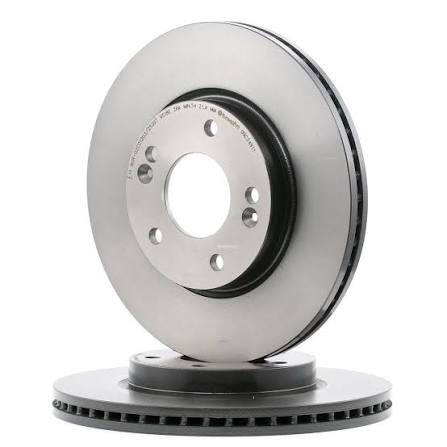
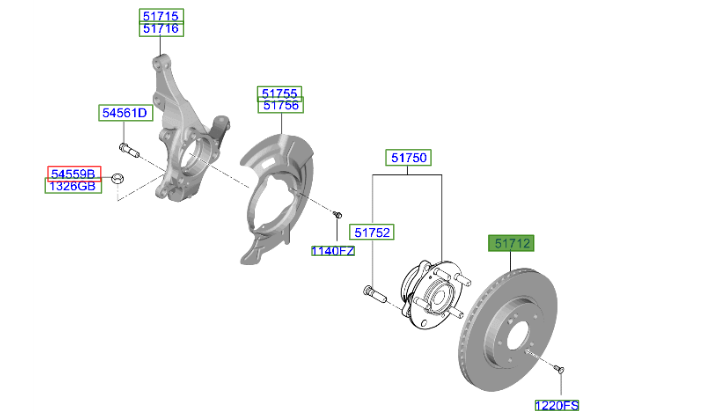
This term refers to the front wheel brake disc — also called a brake rotor or brake disc. It’s the rotating component of the front disc brake system that the brake pads clamp against to slow and stop the vehicle. In parts catalogs and BOMs, “DISC – FRONT WHEEL BRAKE” is the standard brief description used alongside the part number.
What it is
A brake disc is a circular, usually cast-iron (sometimes carbon-ceramic or composite) plate that mounts to the wheel hub and rotates with the wheel. The friction surface is swept by the brake pads, which are hydraulically pressed against it by the caliper piston.
Key construction features
- Friction ring — the swept braking surface.
- Hat (bell) — the central mounting section that bolts to the hub.
- Vent vanes — internal cooling channels on vented discs.
- Hub mounting holes and screw holes — locate the disc on the hub flange.
- Tone ring / ABS ring — either integrated or mounted separately, for wheel-speed sensing.
- Minimum thickness marking — the wear limit stamped on the disc edge.
Function
The disc converts the vehicle’s kinetic energy into heat through friction. That heat is then dissipated to the surrounding air. The disc must resist warping, cracking, and thermal distortion while maintaining a flat, parallel friction surface for consistent braking.
Failure symptoms
- Vibration or pulsation through the brake pedal or steering wheel when braking (typically from thickness variation, runout, or warping)
- Scoring, grooves, or deep radial scratches on the friction surface
- Cracks radiating from the hub area or between vent vanes
- Blue discoloration indicating overheating
- Excessive lateral runout or thickness below the manufacturer’s minimum
- Corrosion and pitting, especially on the inner face or on vehicles sitting unused
Service notes
- Discs are measured with a micrometer at multiple points around the circumference. Below minimum thickness, they must be replaced — not resurfaced.
- Both discs on an axle should generally be replaced as a pair to keep braking balanced.
- Lateral runout should be checked with a dial indicator; excessive runout causes pulsation even on a new disc.
- Hub mating surfaces must be clean and free of rust or debris, and the disc secured to the hub before measuring runout.
- Always use a torque wrench and follow the correct tightening sequence for wheel fasteners.
- New discs should be bedded in with a controlled series of moderate braking cycles to establish proper pad transfer film.
Typical terminology variants
“Front brake disc,” “front brake rotor,” “front wheel disc,” and “DISC – FRONT WHEEL BRAKE” all refer to the same component. Note that some vehicles list the disc and hub as a combined assembly, while others use a separate “rotor-over-hub” or floating design — this affects which part number applies.
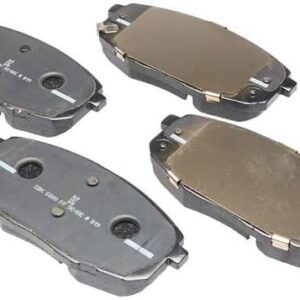
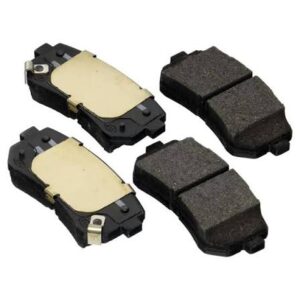
If you give me the specific vehicle or part number, I can tailor the details — dimensions, vented or solid, wether it includes the ABS ring, and paired components like pads and calipers.
Reviews
There are no reviews yet.